A few years ago, a friend of mine, a retired university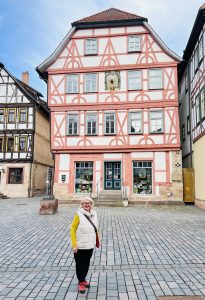 lecturer, asked if I had ever been to Schmalkalden. When I said I hadn’t, he looked at me, surprised: “A good Lutheran girl like you?” I had to admit I knew very little about the place.
That all changed this April, when my husband Mike and I spent a week in the thoroughly delightful town of Schmalkalden, nestled on the southern slope of the Thuringian Forest in the German state of Thuringia. Known for its picturesque half-timbered houses, the town celebrated its 1,150th anniversary in 2024. It was a joy to explore its charming streets, steeped in both beauty and history.
Schmalkalden is not just a visual gem; it’s a place of deep significance in Lutheran heritage. In 1530, at the Diet of Augsburg, Emperor Charles V reaffirmed the Edict of Worms against Martin Luther and rejected the Protestant confession of faith. In response, the Lutheran princes of various territories and cities united in 1531 to form the Schmalkaldic League, a defensive alliance against potential imperial action.
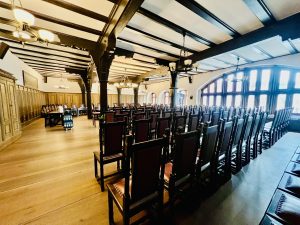
In 1537, Elector John Frederick of Saxony, Luther’s patron, asked Luther to prepare a summary of Lutheran doctrine for the League’s meeting in Schmalkalden. The result was the Smalcald Articles (sometimes spelled Schmalkald Articles), which Luther considered a clear and uncompromising statement of essential Christian teachings. He valued them so highly that he included them in his last will and testament.
Although the Articles were not officially adopted by the Schmalkaldic League at the time, most theologians present subscribed to them. Later, they were incorporated into the Book of Concord, a collection of Lutheran confessional documents that remains the foundational standard of Lutheran doctrine to this day.
Walking the streets of Schmalkalden, it was humbling to stand in a place where faith and conviction shaped the course of history. For anyone with an interest in the Reformation, this little town offers not just insight, but inspiration.
Jill Lange-Mohr OAM, Chair of the Board for Lutheran Education Australia